Advanced Characterization of Technical components for New Power-to-X Technologies
The ACTNXT Vision
ACTNXT aims to strengthen Europe’s capacity to deliver the green transition by making its world-leading research infrastructures more effective for Power-to-X innovation. As Europe works towards climate neutrality by 2050, technologies such as hydrogen production, fuel cells, hydrogen storage, and related conversion pathways will be essential for decarbonising sectors that cannot easily be addressed by current electrical production and storage methods alone. Yet many of these technologies still face major challenges in performance, durability, efficiency, safety, and cost.
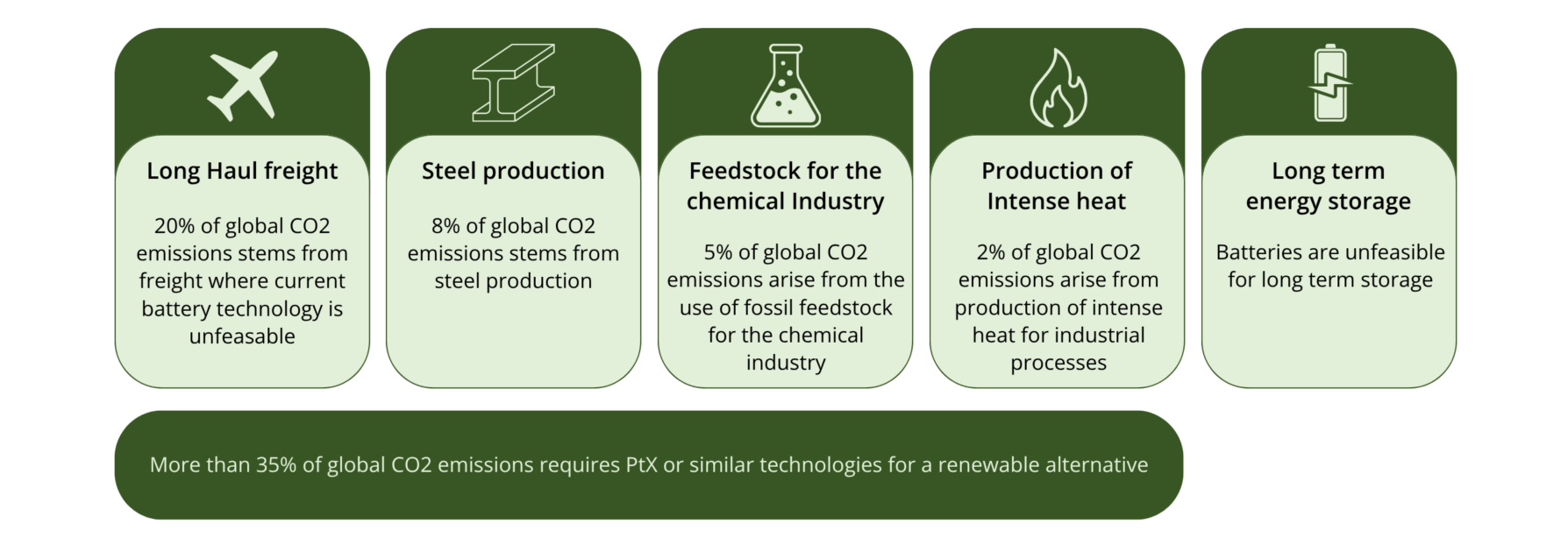
The importance of Power-to-X becomes clear in sectors where direct electrification is not sufficient. PtX technologies are expected to play an important role in areas such as long-haul freight, steel production, chemical feedstocks, industrial heat, and long-term energy storage. Together, the first four areas represent a major share of global CO2 emissions and highlight why progress in PtX is so important for Europe’s climate and industrial ambitions.
ACTNXT addresses this gap by developing the next generation of scientific instrumentation for European neutron and synchrotron facilities, designed to provide crucial knowledge essential to testing novel concepts, component designs and materials, and to understanding their behavior under representative conditions. By strengthening these capabilities, the project will enable these facilities to better support researchers and companies working on Power-to-X solutions, while turning Europe’s research infrastructures into more powerful engines of industrial innovation.
Our Partners
The ACTNXT consortium is coordinated by the Danish Technological Institute’s (DTI) and centered around leading neutron and synchrotron facilities (PSI, ESRF, CERIC, ILL). These partners provide the backbone for developing and commissioning advanced instrumentation dedicated to PtX technologies. University partners (UCPH, TU Darmstadt) offer key supplementary knowledge in digital modeling and materials science. RTOs (DTI, CEA, TNO, EMPA) contribute with an extensive experience in PtX research, development and industrial collaboration. Industrial partners, including both SMEs and major companies, supply end-user perspectives and critical test samples. This integrated approach ensures that new instrumentation is robustly developed and broadly adopted.